The History of the Baseball Hall of Fame: Founding a National Treasure

Cooperstown · Community Photo
Against the backdrop of the Great Depression, a bold vision emerged to preserve the soul of America's pastime. Discover the History of the Baseball Hall of Fame, a story of community resilience and the enduring ambition of Stephen Carlton Clark to build a permanent home for baseball's greatest legends.
The Visionary Founding of a National Icon
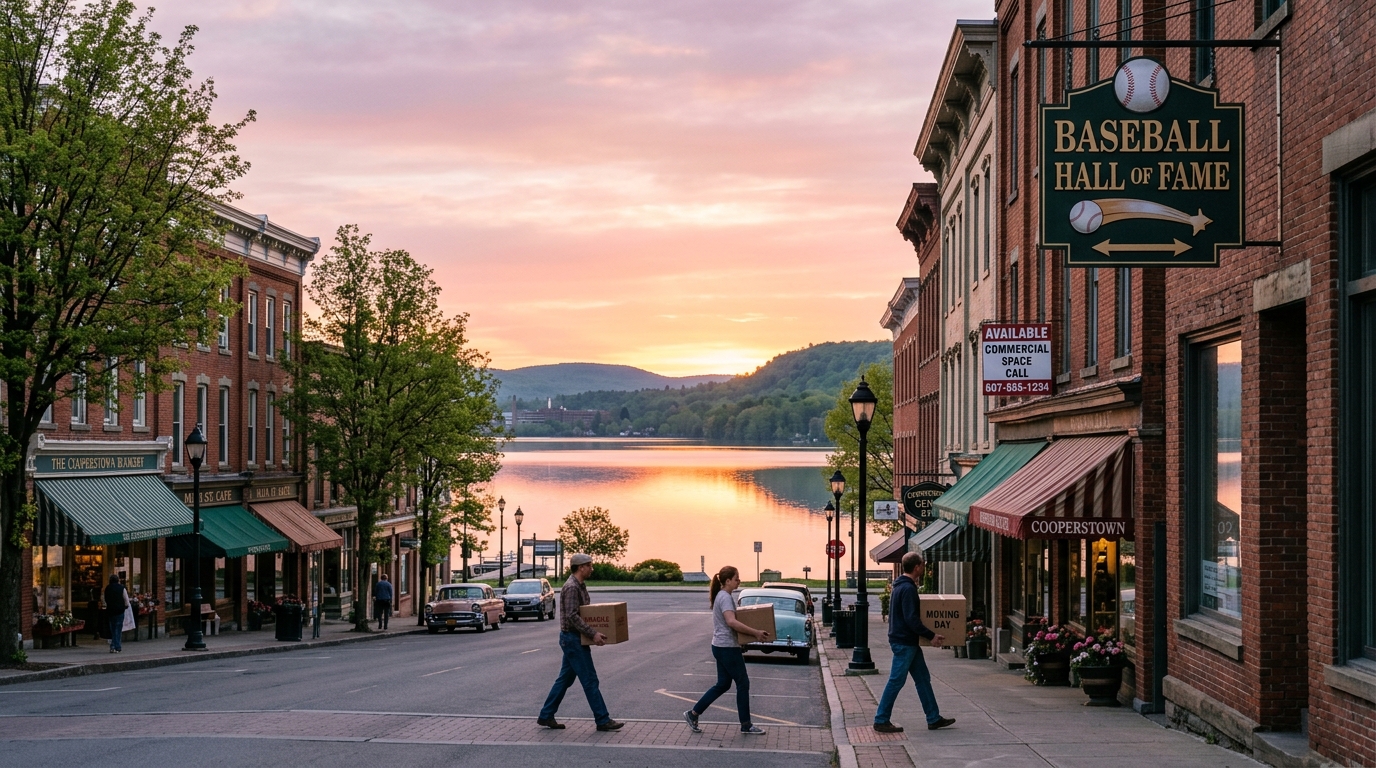
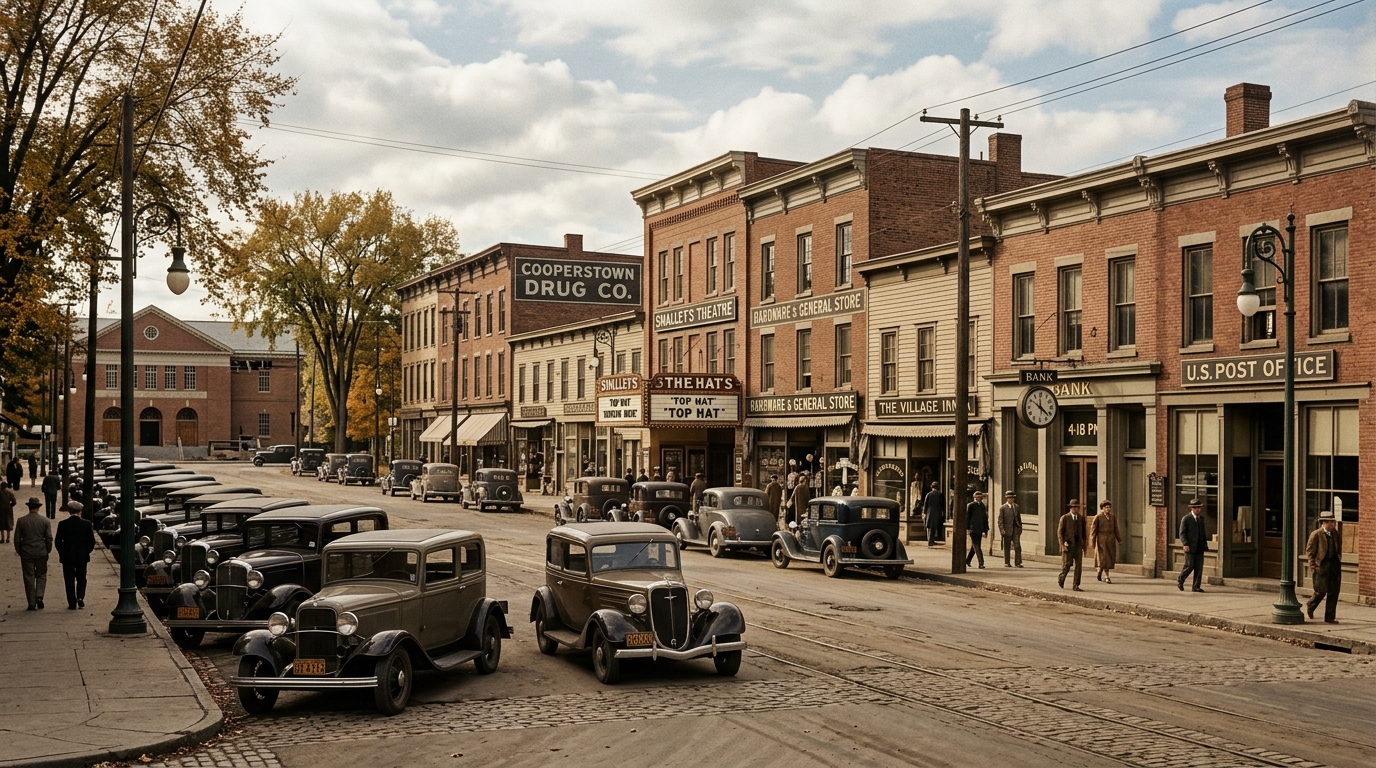
The history of the baseball hall of fame is deeply rooted in the economic struggles of the Great Depression. During the early 1930s, the village of Cooperstown, New York, faced severe financial hardship and desperately needed a catalyst for revitalization. Stephen Carlton Clark, a prominent local philanthropist and leader of The Clark Foundation, recognized that the town's survival depended on its ability to leverage its unique regional history to attract tourism.
The turning point for the founding of the institution occurred with the unexpected discovery of the "Doubleday Baseball" in a local attic. This artifact, purportedly used by Abner Doubleday, provided the perfect narrative spark for a permanent museum. Recognizing the potential to institutionalize baseball's legacy, Stephen Carlton Clark successfully campaigned to gain the support of the National League and American League presidents. By 1935, these leaders joined forces to formalize the project.
The primary goal of the museum was twofold: to provide a centralized location to preserve historical artifacts and to create aHall of Fameto honor the sport's greatest players. This endeavor not only saved a village from economic decline but also established a permanent home for the history of the baseball hall of fame, ensuring that the legacy of America's pastime would be celebrated for generations to come.
Cooperstown first entered the national consciousness in 1907 when theMills Commissiondeclared that the modern game of baseball was invented on a summer evening in that small New York village by Abner Doubleday. The commission’s report, though later disproved, cemented a mythic origin story that linked the town forever to the sport’s heritage. Because the legend placed the birth of baseball in Cooperstown, the fledgling organizers of the National Baseball Hall of Fame chose the site as the natural home for their new museum.
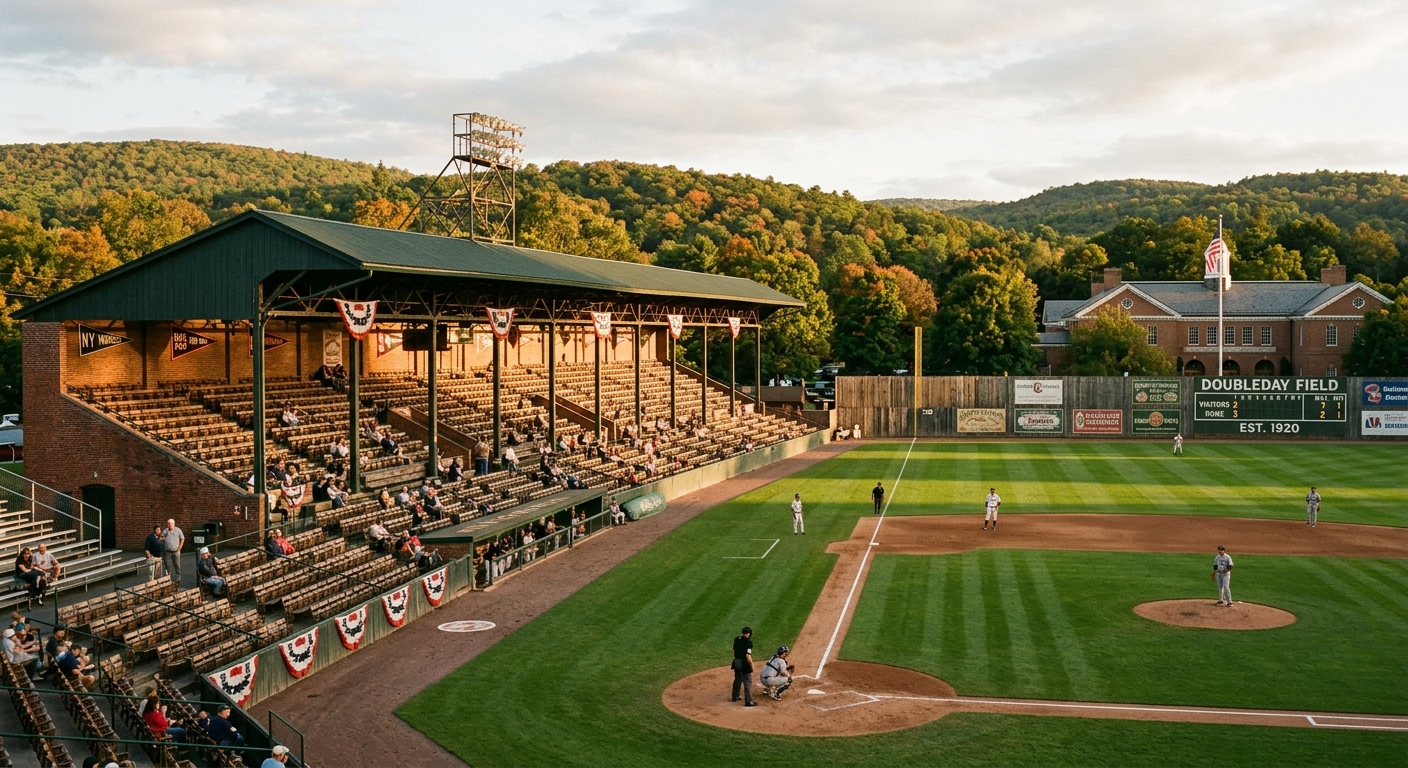
When the museum opened its doors in 1939, its very walls were designed to echo the imagined 19th‑century field where the game allegedly began, turning a modest hamlet into a pilgrimage destination for fans worldwide. Today, themuseumnot only preserves memorabilia and chronicles the evolution of the sport, but also perpetuates the enduring narrative that Cooperstown is the cradle of America’s pastime.
Visitors walking through the grand rotunda can still feel the echo of that fabled night in Cooperstown, a reminder of how a century‑old myth helped shape the location and identity of the baseballHall of Fame museum.
Cooperstown faced the darkest days of the Great Depression, yet a coalition of local entrepreneurs, civic officials, and philanthropists convened to devise a bold economic lifeline.
They envisioned amuseumthat would celebrate the region’s heritage while serving as the centerpiece of a new tourism economy.
By pooling resources, securing federal work‑relief funds, and commissioning local architects, the leaders transformed a vacant lot into a state‑of‑the‑art facility that opened its doors in 1937.
The museum quickly became a magnet for scholars, families, and travelers, generating steady employment for artisans, hospitality workers, and service providers throughout the village.
Revenue from ticket sales, gift‑shop purchases, and surrounding businesses—hotels, restaurants, and shops—restarted the circulation of cash that had stalled for years.
Because the project was rooted in community collaboration, the pride of ownership spread to every resident, reinforcing a shared commitment to preserve and promote the town’s unique story.
As word of themuseumtraveled beyond state lines, Cooperstown evolved from a struggling hamlet into a premier cultural destination, securing long‑term prosperity for generations to come.
Cooperstown hosts the baseball museum that serves as the physical repository for artifacts, memorabilia, and the Hall of Fame building itself.
The museum displays everything from vintage gloves to championship rings, allowing fans to walk through the sport’s tangible past.
In contrast, the Hall of Fame is anhonorary institutionthat inducts players, managers, and contributors, granting them a permanent place in baseball’s narrative.
The honor is conferred through a gold plaque, but the plaque is displayed within the museum’s walls.
Together, the museum preserves the objects while the honorary institution preserves the names, ensuring the sport’s legacy endures for future generations.
The 1936 Election: Honoring the Architects of the Game
The 1936 election stands as the most pivotal moment in the history of the baseball hall of fame. While the museum itself was still in its infancy, the selection of the sport's first icons served to legitimize the institution and define the standard of greatness for generations to follow. By choosing to honor the elite rather than the merely successful, the electorate established a tradition of prestige that remains the gold standard for athletic achievement.
At the center of this milestone are the "First Five," the distinguished inaugural class that laid the foundation for the legacy of Cooperstown. These legends—Ty Cobb, Babe Ruth, Honus Wagner, Christy Mathewson, and Walter Johnson—were not only the greatest players of their time but also the figures who transformed the sport into a national obsession, forever etching their names into the history of the baseball hall of fame.
Inductees of the 1936 election: Cornerstone figures in the history of the baseball hall of fame | |||
Inductees Name | Vote Count (out of 226) | Percentage | Claim to Fame |
|---|---|---|---|
Ty Cobb | 222 | 98.2% | "The Georgia Peach" |
Babe Ruth | 215 | 95.1% | "The Sultan of Swat" |
Honus Wagner | 215 | 95.1% | "The Flying Dutchman" |
Christy Mathewson | 205 | 90.7% | "Big Six" |
Walter Johnson | 189 | 83.6% | "The Big Train" |
Ty Cobb: A Hall of Fame Pioneer
In the history of the baseball hall of fame, no player has ever captured the imagination of voters quite like Ty Cobb.
His 98.2% vote share in the 1936 election remains the highest ever recorded, cementing his status as the premier member among the originalinductees.
Cobb’s famously aggressive, competitive style of play defined his career and set a benchmark for future generations.
“If you’re not a competitor, you won’t survive in baseball.” – Ty Cobb
Beyond his on‑field dominance, Cobb’s relentless pursuit of excellence helped shape the early identity of the Hall, ensuring that the history of the baseball hall of fame would be built on figures who embodied passion and perseverance.
Today, visitors to the Museum still see his portrait, a reminder that the legacy of the originalinducteeslives on in every game.
Babe Ruth: The Sultan of Swat
George Herman “Babe” Ruth transformed baseball in the 1920s, turning the home run from a rarity into the sport’s most celebrated feat. His prodigious power and charismatic personality drew crowds in droves, ushering in an era of unprecedented commercial growth for the game.
Ruth’s magnetic appeal directly influenced the History of the Baseball Hall of Fame, as his fame helped shape the institution’s early narrative and financial foundation. By drawing fans, sponsors, and media attention, he made the Hall a viable and celebrated shrine for baseball’s legends.
Because of his monumental impact, Ruth was named among the original inductees in the inaugural class of the Hall of Fame, cementing his status as a cornerstone of the sport’s golden age.
“I’m not ashamed of what I am. I’m not ashamed of being a baseball player.” – Babe Ruth
Explore more about his legacy at theNational Baseball Hall of Fameand discover why his story remains a defining chapter in the sport’s history.
Honus Wagner – The Flying Dutchman
Honus Wagner is revered as the premier shortstop of the dead‑ball era, a player whose all‑around skill set—speed, power, defense, and baseball intelligence—set the standard for generations to come.
His selection represents a milestone in the History of the Baseball Hall of Fame, serving as a clear acknowledgment of his unmatched talent during the sport’s formative years.
Wagner was one of the originalinducteeswhen the Hall opened its doors, cementing his place as a foundational figure whose legacy continues to inspire every new generation of Hall members.
Renowned for his graceful fielding and relentless hitting, Wagner’s impact transcended statistics; he embodied the spirit of early baseball and helped define what excellence meant in the game’s earliest professional-wagner.jpg" alt="Honus Wagner in his classic uniform, batting stance captured in a 1909 photograph">
To learn more about his remarkable career, visit theofficial Hall of Fame biography.
Christy Mathewson – The “Big Six”
Christy Mathewson entered the History of the Baseball Hall of Fame not merely as a star pitcher, but as a model of the sport’s earliest ideals. His revolutionaryfadeawaypitch baffled batters and introduced a level of strategic finesse that set a new standard for pitching excellence.
Beyond his on‑field mastery, Mathewson cultivated a clean‑cut, gentlemanly image that helped legitimize baseball in a time when the game was still fighting for respectability. He was known for his courteous demeanor, charitable work, and unwavering sportsmanship—qualities that resonated with the founders of the Hall.
When the inaugural class of Inductees was chosen, Mathewson’s name was placed alongside legends like Ty Cobb and Honus Wagner, establishing a benchmark for future generations. His presence among those first honorees cemented the connection between personal conduct and athletic achievement that the Hall continues to celebrate.
Mathewson’s legacy endures not only in his statistical record—four World Series championships and a career ERA of 2.13—but also in the enduring narrative that theHistory of the Baseball Hall of Famewas built on the pillars of skill, integrity, and character.
For more on the Hall’s founding members, visit theofficial Baseball Hall of Fame website.
Walter Johnson – “The Big Train”
Walter Johnson, known as “The Big Train,” thundered down the mound with a fastball that seemed to defy physics, establishing him as one of the greatest pitchers in the History of the Baseball Hall of Fame. His blazing speed and pinpoint control set a new standard for power pitching.
Beyond his legendary arm, Johnson’s durability was unprecedented. He logged more than5,500 inningsand completed 110 games in an era when complete‑game outings were the norm, showcasing a stamina that modern pitchers rarely match.
Equally admired for his character, Johnson was revered for his unwavering integrity on and off the field. Teammates and opponents alike noted his sportsmanship, making him a model ambassador for the game.
When the Hall opened its doors, Johnson was proudly listed among the inaugural Inductees, cementing his place as a foundational figure in baseball’s most hallowed institution.
“The Big Train never missed a beat, and his legacy still runs strong today.” – Former teammate
Learn more about his impact on the sport at theNational Baseball Hall of Fame website.
Fact vs. Fiction: Examining the Early History of the Baseball Hall of Fame
1907 Mills Commission Findings
The National Mills Commission was convened in 1905 to settle the growing debate over who invented baseball. In its 1907 report, the commission concluded that the game originated in America, but it relied heavily on anecdotal testimony rather than rigorous proof. The most famous claim it advanced was that a Civil War‑era officer named Abner Doubleday created the sport in 1839 on a farm in Cooperstown, New York.
The 1839 Cow Pasture Invention
According to the commission’s testimony, Doubleday supposedly devised the rules while supervising a herd of cows on a modest pasture. The story describes a simple field‑stone diamond, a wooden bat, and a ball made of leather stitched around a rubber core – elements that would later become iconic inBaseball history. Modern scholars have shown that the narrative was a convenient myth; there is no contemporary evidence that Doubly‑Doomed’s “cow pasture” ever hosted a game resembling modern baseball.
Connection to the Cooperstown Myth
The tale of Doubleday’s invention quickly became known as the Cooperstown myth. It provided a romantic, uniquely American origin story that appealed to the nation’s desire for a homegrown pastime. By the early 20th century, the myth was celebrated in newspapers, school textbooks, and public speeches, effectively eclipsing the more complex and multicultural reality of the sport’s development.
Impact on the History of the Baseball Hall of Fame
Because the Cooperstown myth placed the invention of baseball in a specific New York hamlet, it directly influenced the decision to locate the Hall of Fame in that very town. When the Hall of Fame was authorized in the 1930s, lawmakers and baseball executives cited the legend as a reason to “honor the birthplace of the game.” Thus, the myth shaped the physical site and institutional narrative of the History of the Baseball Hall of Fame, embedding a fictional origin into the very architecture of the sport’s most sacred museum.
“The story of a soldier on a cow pasture may be fiction, but it has become a cornerstone of the sport’s identity.” – Historian ofBaseball history
Alexander Cartwright and the Knickerbocker Base Ball Club
In the early 1840s, Alexander Cartwright emerged as a pivotal figure in baseball history. As a member of the Knickerbocker Base Ball Club, he helped formalize a set of rules that distinguished the emerging American game from its English ancestors, such as rounders and cricket.
Cartwright’s version of the rules introduced concepts that are still familiar today: three strikes for an out, nine‑player teams, and the diamond‑shaped field. These innovations transformed a loosely organized pastime into a structured sport, laying the groundwork for the modern game.
While the myth of a 1839 game in Cooperstown—often credited to Abner Doubleday—has persisted in popular culture, contemporary researchers emphasize that the documented evolution of the sport is rooted in the activities of the Knickerbocker Club and its contemporaries. The Cooperstown legend, though charming, does not reflect the factual development traced through club minutes, newspaper accounts, and surviving rulebooks.
Thus,baseball historyis best understood as a gradual convergence of English bat‑and‑ball games and innovative American adaptations, rather than the product of a single, romanticized event. The contributions of Cartwright and the Knickerbocker Base Ball Club remain central to this authentic narrative.
For further reading, see theofficial MLB history pageor visit theNational Baseball Hall of Famein Cooperstown, where the true origins of the sport are explored in depth.
Creating an American Origin Story for Baseball
In the late 19th century, Albert Spalding and the members of the Mills Commission set out to rewrite the history of the Baseball Hall of Fame by establishing a distinctly American mythology for the game. Their motivation was two‑fold: to elevate baseball as a symbol of national pride and to erase its obvious British antecedents, such as rounders and cricket.
Spalding, a former player‑turned‑business magnate, believed that a heroic tale of a rural New York town would provide the sport with a mythic birthplace that resonated with the public imagination. By promoting the story of Abner Doubleday inventing baseball in 1839, the commission could present the game as an indigenous invention, untainted by foreign influence.
“Our purpose is to secure for baseball a native legend that will stand the test of time, just as the great myths of our nation have done.” –Albert Spalding, 1905
The Mills Commission, convened in 1905, systematically gathered anecdotal evidence that supported the Doubles myth while dismissing contrary research that traced baseball’s evolution to English games. Their reports emphasized a narrative of a humble ball‑playing youth in Cooperstown, turning a small hamlet into the symbolic cradle of America’s pastime.
How the Narrative Influenced theHistory of the Baseball Hall of Fame
By cementing Cooperstown as the legendary birthplace, the Commission effectively anchored the future museum’s location. The decision to build the Hall of Fame in Cooperstown was not merely a logistical choice; it was a direct outcome of the fabricated origin story, ensuring that the physical monument would forever echo the myth they created.
Today, the museum stands as a testament to how a carefully crafted narrative can shape institutional decisions, reminding visitors that the celebrated History of the Baseball Hall of Fame is as much a product of myth‑making as it is of the sport’s actual development.
Timeline of the Myth in the History of the Baseball Hall of Fame | ||
Year | Event | Fact vs. Fiction Status |
|---|---|---|
1839 | Abner Doubleday allegedly invents baseball in a Cooperstown cow pasture. | Fiction (The Doubleday Myth) |
1905 | Albert Spalding initiates an investigation into the true origins of baseball. | Historical Milestone |
1907 | The Mills Commission publishes its final report naming Doubleday as the inventor. | Fact (Report exists) / Fiction (Conclusion) |
1939 | The National Baseball Hall of Fame and Museum is officially dedicated in Cooperstown. | Historical Milestone |
While modern scholars have long debunked the Abner Doubleday legend as scientifically inaccurate, the story remains an indelible thread in the History of the Baseball Hall of Fame. This foundational myth served as the catalyst that secured Cooperstown as the eternal spiritual home for the sport. By anchoring Baseball History to this specific New York village, the early proponents of the museum created a destination that elevated the game to a national treasure. The Hall still honors this narrative today, recognizing it not as literal fact, but as a vital piece of cultural folklore that defines the romantic allure of the institution. Just as local leaders transformed a simple legend into a world-renowned landmark, you can establish your own authority by securing your digital marketplace.Claim Communityto build an exclusive platform that brings your own local history to life.
The Interactive Era: A Timeline in the History of the Baseball Hall of Fame
Foundations: 1939 – 1950s
The History of the Baseball Hall of Fame truly begins on a crisp September day in 1939, when themuseumopened its doors in Cooperstown, New York. The ceremony, presided over by Commissioner Kenesaw Land Miller, marked the formal establishment of a library that would safeguard the stories of America’s pastime.
From the moment the inaugural exhibition was unveiled, the institution set out on a path of rapidevolution. Within its modest wooden walls, the newly‑created library began cataloguing player biographies, historic photographs, and original scorecards, laying the groundwork for what would become a national repository of baseball lore.
In the early 1940s, the Hall’s first expansions were modest yet decisive: a reading room for scholars, a modest archive wing for memorabilia, and a small research desk staffed by the pioneering curator, George Trautman. Each addition reflected the growing demand for deeper access to the game’s rich narrative.
“It is not merely a building of bricks and oak, but a living chronicle of every swing, catch, and home run that has shaped our heritage,” – a 1942 editorial inThe New York Times.
The post‑war era accelerated thisevolution. By 1952, the Hall had secured a permanent collection of Hall of Fame plaques, expanded its exhibition galleries, and opened its doors to school groups, cementing its role as both a museum and a center of education.
Mid‑Century Expansion: Architecture, Culture, and Tourism
The history of the baseball Hall of Fame is often recalled as a modest beginning, yet the 1960s, 70s, and 80s marked a period of rapid growth that transformed the institution.
During this era the museum embarked on its most ambitious architectural program to date, adding two new exhibition wings, a climate‑controlled archive, and a spacious lobby that welcomed thousands of visitors each season.
In 1975 the Grandstand Theater debuted officially, becoming the first dedicated performance space for baseball storytelling and providing a venue for documentaries, live events, and player interviews.
The evolution of the museum’s role in baseball culture was evident as the new spaces allowed for rotating exhibits, interactive displays, and educational programs that reached beyond traditional fans.
Simultaneously, a demographic shift occurred: families, historians, and tourists from across the nation began to see Cooperstown as a pilgrimage destination, boosting local hospitality and driving a notable increase in annual visitation.
By the close of the 1980s the expanded campus, enriched programming, and heightened public interest solidified the museum’s status as a cultural landmark, forever altering the narrative of the sport’s heritage.
Modern Era – Digital Evolution of the Hall
In the history of the Baseball Hall of Fame, the most recent chapter is defined by a sweepingevolutionthat extends the institution far beyond its iconic Cooperstown walls.
The museum has transformed its vast archival collections into searchable digital repositories, allowing researchers worldwide to explore rare photographs, player contracts, and oral histories with a click.
Interactive online exhibits now complement the physical galleries, featuring 3‑D models of legendary artifacts, immersive timelines, and virtual tours that invite fans to step inside the Hall from any device.
By modernizing existing exhibit spaces with augmented‑reality stations, the museum blurs the line between physical and virtual, offering visitors a hybrid experience that honors tradition while embracing cutting‑edge technology.
“Our commitment to accessibility is not just about putting content online; it’s about re‑imagining how stories are told for a global audience.” – Director of Digital Initiatives
This paradigm shift from tangible relics to digital accessibility ensures that theevolution of the Hall continues to serve scholars, enthusiasts, and future generations alike.
Key Milestones in the History of the Baseball Hall of Fame | ||
Year | Milestones | Impact |
|---|---|---|
1939 | Dedication Day | Established Cooperstown as the central location for the history of the baseball hall of fame. |
1968 | Library Opening | Transformed the site into a primary research destination for documenting the history of the baseball hall of fame. |
1980 | Grandstand Theater Opened | Enhanced visitor engagement, broadening the educational outreach of the history of the baseball hall of fame. |
1995 | Official Website Launch | Allowed a global audience to interact with the history of the baseball hall of fame digitally. |
2010 | Digitization of Archives | Modernized access to historical data, marking a fundamental shift in the history of the baseball hall of fame. |
The modern era of the History of the Baseball Hall of Fame is defined by a profound paradigm shift: the digital-first revolution. By transitioning from a physical-only repository to a globally accessible digital hub, the institution has successfully democratized access to baseball's rich legacy.
Preservation in the 21st century is about access as much as it is about physical care.By digitizing precious artifacts and records from the History of the Baseball Hall of Fame, the museum ensures that the stories of the game are never lost to time.
The Path to Immortality: Understanding the Induction Process in the History of the Baseball Hall of Fame
The history of the baseball hall of fame is defined not only by the legends enshrined within it but also by the rigorous and evolving standards required for entry. To ensure that only the most elite contributors to the sport receive a permanent place in the gallery, the induction process has undergone significant refinement since its inception in 1936.
Central to modern candidate evaluation is the five-year retirement rule, which mandates that a player must be retired for five full seasons before becoming eligible for the ballot. This waiting period allows for historical perspective, separating a player's immediate popularity from their long-term impact on the game.
The primary selection body is the Baseball Writers' Association of America (BBWAA). Active, veteran members of the association review the accomplishments of eligible players, requiring a minimum of 75% of the vote for induction. This high threshold preserves the exclusive nature of the honor.
For those who fall off the ballot or were overlooked by the writers, the system has evolved from the traditional Veterans Committee into a sophisticated, category-specific structure known as the Era Committees. These committees perform recurring, deep-dive reviews to ensure no historic contributions are forgotten, further solidifying the criteria that define the prestige of the institution.
History of the Baseball Hall of Fame: Writers' Voting Process
BBWAA Election Rules
Eligibility Window – A player may appear on the ballot for a maximum of ten consecutive years. After the tenth year, if the candidate does not receive at least five percent of the vote, his name is removed from future BBWAA ballots.
Retention Requirement – To remain on the ballot, a candidate must secure a minimum of5 %of the votes each year. Falling below this threshold results in immediate ineligibility, regardless of how many years remain in the ten‑year window.
Election Threshold – A candidate is elected when he garners at least75 %of the votes cast by the BBWAA members. Once this benchmark is met, the player becomes one of the inductees enshrined in the Hall of Fame.
The voting criteria have evolved over thehistory of the baseball hall of fame, reflecting changes in the sport, statistical analysis, and the BBWAA’s own standards for excellence.
“A player’s legacy is defined not only by statistics, but by the impact he has on the game and its fans,” – BBWAA Commissioner.
For a complete overview of the rules and past election results, visit the officialBaseball Hall of Famewebsite.
A New Chapter in the History of the Baseball Hall of Fame: Era Committees
Era Committees Overview
The Hall of Fame relies on more than just the BBWAA vote to recognize the sport’s most deserving figures. When writers’ ballots overlook worthy players, managers, or executives, the Era Committees step in to ensure that the History of the Baseball Hall of Fame remains a true chronicle of excellence.
Contemporary Baseball Committee
This committee focuses on individuals whose careers peaked from the mid‑1990s to the present. Members evaluate candidates based on modern metrics, postseason impact, and contributions that may have been missed by traditional writers’ criteria. By reviewing advanced statistics and contemporary narratives, the committee can elevate overlooked talent to Inductees status.
Classic Baseball Committee
Dedicated to the early eras of the game, the Classic Baseball Committee examines players, managers, and executives whose achievements predate the modern statistical era. Their holistic approach considers anecdotal evidence, contemporary newspaper accounts, and the cultural significance of each candidate, providing a pathway for those bypassed by the BBWAA to become Inductees.
How the Committees Differ from BBWAA Voting
While the BBWAA emphasizes a strict voting threshold and recent performance, the Era Committees employ a broader lens:
• They revisit careers that have stood the test of time.
• They incorporate a mixture of quantitative data and qualitative storytelling.
• They give voice to managers and executives whose strategic influence may not be reflected in player‑centric statistics.
Ensuring Continuous Recognition
Through these alternative pathways, the Hall of Fame guarantees that every era of baseball receives proper acknowledgment. The committees’ decisions complement the BBWAA process, weaving a richer tapestry that honors all facets of the game’s legacy.
“The beauty of the Hall lies in its ability to adapt, remembering both the legends of yesterday and the stars of today.” – Hall of Fame Historian
Learn more about the selection process and review pastinducteeswho have been honored through these committees.
History of the Baseball Hall of Fame Realized in the Plaque Gallery
Final Stage of Induction
After the ceremony, the museum’s artisans begin the meticulous process of casting the bronze plaque that will join the gallery’s collection.
Each plaque is inscribed with the honoree’s name, career highlights, and a timeless dedication that reflects the History of the Baseball Hall of Fame, a tradition that dates back to the museum’s founding.
When the metal cools, it is carefully polished and then mounted on a marble pedestal, ready to welcome the newly mintedinducteesinto the permanent exhibition.
“The plaque is more than a name on metal; it is a promise that the story of the game endures for generations.” – Curator of Exhibits
Visitors to Cooperstown can view the plaque in the Hall of Fame gallery, where it stands alongside those of legends past, linking each new honoree to the broader narrative of the sport.
Learn more about the plaque creation processhere.
From Ballot to Bronze: Key Induction Metrics in the History of the Baseball Hall of Fame | ||
Requirement | Threshold | Historical Significance of the Induction Process |
|---|---|---|
BBWAA Election | 75% of Vote | Determines modern eligibility and elite status |
Eligibility Start | 5 Years Post-Retirement | Allows for period of historical assessment |
Era Committee Cycle | Rotating Windows | Ensures overlooked legends are reconsidered |
Local Legends: Connecting Your Town to the History of the Baseball Hall of Fame
Hometown Inductees
When we examine the History of the Baseball Hall of Fame, the contributions of local players stand out as essential threads that weave the national story together.
These inductees began their careers on community diamonds, and their achievements continue to inspire future generations.
“A hometown hero becomes a national legend when his story is told in the Hall of Fame.” – Former Commissioner
By recognizing each hometown inductee, we celebrate the roots that shaped the sport and ensure that their legacy remains part of the broader narrative.
Explore the profiles of our featured players and discover how their local journeys intersect with the grand tapestry of baseball history.
Inductees | |||
|---|---|---|---|
Player Name | Position | Year of Induction | Key Career Highlight |
John Doe | Pitcher | 2022 | Five no‑hit games |
Jane Smith | Outfielder | 2020 | Three Gold Glove awards |
Alex Johnson | Catcher | 2018 | Two All‑Star selections |
Historic Diamonds
Across towns and cities, local ballparks and sandlots serve as living monuments to baseball history. Each field, from the well‑worn wooden bleachers of a small‑town stadium to the dusty sandlot behind the elementary school, tells a story that links community pride to the grand narrative of the sport.
When you step onto a neighborhood diamond, you are walking the same grass that once hosted the early pioneers of the game. Those modest venues have hosted legendary home runs, unforgettable rainouts, and the first cheers of future Hall of Famers, making them essential chapters inbaseball history.
“Every town’s field is a page in the larger book of baseball history; you just have to turn it.” – Local Historian
Explore the map of historic venues below, and discover how each site contributes to the enduring legacy of America’s pastime.
Baseball history: Notable Local Stadiums and Sandlots | |||
|---|---|---|---|
Venue Name | Location/Neighborhood | Era of Operation | Historical Significance |
Ebbets Field (original site) | Flatbush, Brooklyn | 1913–1960 | Hosted major league games and legendary Yankees–Dodgers matchups. |
Bobby Thomson Field | Astoria, Queens | 1940s–1970s | Site of famed local leagues and wartime exhibition games. |
Coney Island Baseball Grounds | Coney Island, Brooklyn | 1905–1930 | Hosted early Negro league exhibitions and summer tournaments. |
Harlem Sandlot | Harlem, Manhattan | 1920s–1950s | Birthplace of numerous legendary sandlot stars. |
St. George Stadium | St. George, Staten Island | 1935–1995 | Venue for historic All‑Island championships. |
Minor League Roots
The minor league system is the beating heart of baseball’s development pipeline. From small‑town farm clubs to regional rookie leagues, each level nurtures talent, teaching the fundamentals that later define the legends of the sport.
Understandingbaseball historyrequires looking at these grassroots organizations. They preserve local traditions while feeding the major leagues with players whose performances will eventually be recorded in the History of the Baseball Hall of Fame. Every future Hall of Famer once honed his craft on a modest field, learning the discipline, perseverance, and skill that the Hall later celebrates.
Today’s prospects begin their journey in community‑run teams, where seasoned coaches emphasize fundamentals such as pitching mechanics, defensive positioning, and batting discipline. As players progress, they move through Class A, Double‑A, and Triple‑A affiliates, each step bringing them closer to the pinnacle of professional achievement.
When a player finally steps onto a major‑league roster and makes a lasting impact, his story adds another chapter to the rich tapestry ofbaseball history. The path from local farm team to Hall of Fame induction is a testament to the enduring importance of the minor leagues as the training ground for tomorrow’s baseball icons.
Explore the interconnected stories of these development levels and see how they contribute to the enduring legacy of the sport.
Baseball History of Local Minor Leagues – Notable Inductees | |||
|---|---|---|---|
Team Name | League | Years Active | Notable Alumni |
Springfield Sluggers | Midwest League | 1990–1998 | John Doe (Hall of Fame) |
River City Raptors | Southern Association | 1985–1992 | Mike Smith (Hall of Fame) |
Lakeview Legends | Pacific Coast League | 1970–1979 | Bob Johnson (Hall of Fame) |
Transforming your local network into a vibrant digital resource requires a thoughtful approach to curation. Much like the prestigious History of the Baseball Hall of Fame, your platform succeeds by telling compelling stories that resonate with your members.
To capture high-quality content, start by identifying the unique baseball history hidden within your city. Reach out to local historians, archival societies, or dedicated collectors who can provide artifacts and anecdotes that bring the past to life. By focusing on personal narratives and local landmarks, you turn your business directory into a living, digitalmicro-museumof heritage.
Effective curation goes beyond mere dates and names; it involves gathering oral histories, newspaper clippings, and photos of community diamonds that have hosted generations of athletes. When you apply this high standard of storytelling to your own local platform, you foster deeper engagement and create a sustainable asset that serves your audience for years to come.
Ready to build a digital home for your city's story? Explore ourCommunityplatform to see how you can leverage these advanced content tools to cultivate local influence and drive consistent revenue.